


The new breed of chocolate snobs
By Lessley Anderson and James Norton (chow.com)
Not long ago, Seth Wolf’s wife found something in her husband’s possessions that shocked her. Was this the man she knew? Was he harboring a dastardly secret? No, Wolf didn’t have lipstick on his collar or a hotel receipt in a phony name. He simply had a bar of milk chocolate stashed away.
Wolf adores dark chocolate, his wife knew, and looks down upon the dairy-tinged version of his favorite confection as a lower-quality food, indeed as trash. So what was he doing slummin’ it? Wolf explained that he’d bought the bar for a friend. And you better believe he was telling the truth.
The number of Americans who, like Wolf, prefer dark chocolate to milk almost doubled from 1991 to 2003. Industry types such as John Scharffenberger, cofounder of the eponymous high-end chocolate company now owned by Hershey, say dark-chocolate-lovers are actually growing at a rate of 25 percent a year. The boom is fueled by studies trumpeting the antioxidants in dark, an exploding variety of new artisanal chocolate bars, savvy marketing, and good old-fashioned elitism. And with it, a culture of snobbery has grown.
It starts with cacao percentage. Several years ago, specialty chocolatiers like Scharffen Berger began printing it on their labels. The number, a combined total by weight of cocoa solids and cocoa butter, reflects the percentage of ingredients derived purely from the cacao bean. So, the higher percentage of stuff from the bean, the lower the amount of other ingredients, like, say, sugar. Consumers began equating higher cacao percentage with better quality, because as Scharffenberger explains, “If you’re putting less sugar in it, the cacao’s gotta be pretty good. You can’t make an 80 percent out of crummy cacao—you won’t be able to eat it.”
But percentage-mongers are only partly right. “It’s not always the amount of cacao content—it’s really the bean profile and where it’s grown and how it’s fermented that dictates its intensity, its level of acidity, and its astringency,” says upscale-chocolate-maker Michael Recchiuti. “And also the roast time. There are a lot of those elements that play into percentage wars. We have an 85 percent bar, and everybody says it tastes like 65. It’s very smooth, and low in acid, and very fruity.”
Try telling that to Elissa, an editor from Sausalito, California, who asked that her last name not be used to protect her privacy. She won’t eat anything less than 87 percent. Her friends who do are “sugarholics,” she says, disdainfully.
It’s getting to the point, says David Lebovitz, that whenever this pastry chef and cookbook author leads a chocolate tasting, everyone asks him what percentages the samples are.
“Americans like high numbers,” says Lebovitz. “That’s why we haven’t switched to the metric system: 40 degrees is not exciting; 110 degrees is!”
Wine for Dummies
Adding fuel to the fire are the chocolate-makers themselves. Borrowing language from the wine world, many high-end producers are trumpeting their beans as single origin, even if the origin is an entire country like Venezuela; printing the year (called the vintage just like wine) that the beans were harvested on the label; and producing limited edition bars, made in small batches from one harvest.
“You can choose a terroir and vintage and if you taste carefully, you’ll be able to taste something of the country where the cocoa beans were grown,” reads the website of producer Chocolove.
But the analogy only sorta works. Like grapes, cocoa beans reflect the soil and weather conditions where they were grown. But you’ll have to have a great memory if you want to compare different years from the same producer.
“There’s a reason why you can’t find a flight of chocolates from 2003, 2004, 2005, and 2006,” says Clay Gordon, editor of chocolate blog chocophile.com. “By the time you get the 2006 and produce it, the 2003 is way past its peak.”
Wine ages. Chocolate rots.
Milk Is for Amateurs
Milk chocolate, meanwhile, has taken a kneecapping at the hands of those who view it as an adulterated and diluted version of “the real thing,” and others who fail to discriminate between waxy mass-market candy bars and high-quality milk chocolate.
People who like milk chocolate, says Gordon, author of an upcoming book on the confection, “have become the white-Zinfandel drinkers of the chocolate world.” The lighter the chocolate, the thinking goes, the less sophisticated it is.
“I have had people come in embarrassed,” says Adam Smith, owner of San Francisco newsstand and chocolate shop Fog City News. “They’ll sorta look around and say in a low voice, ‘Uh, I actually like milk chocolate, but my friends say I shouldn’t like it.’”
Smith, Recchiuti, Gordon, and Lebovitz all believe dark-chocolate snobs are missing out on some darn good chocolate.
“There are nuances to milk chocolate that you can never achieve with dark chocolate,” says Recchiuti. “The milk adds a different dimension to the flavor. And if you can really taste the cacao—as opposed to the first things hitting your palate being sugar and milk—then it becomes interesting.”
Recently, Smith was invited to lead a blind chocolate tasting at the Berkeley Chocolate Club in Berkeley, California. Smith was well aware that the group had a rule about only tasting dark chocolate (because most of the members like it better). However, after stealthily confirming that nobody had an allergy to dairy, Smith secretly slipped a milk chocolate sample into the lineup.
When the club members tasted the plant, there were gasps and cries of “This is very interesting!” “Cinnamon notes!” “A cheesy quality!” One person exclaimed, “Oh my God!” When Smith told them it was milk chocolate, the members amiably admitted they should, says Smith, “open their eyes to it.”
To date, the Berkeley Chocolate Club continues to taste only dark chocolate.
Thursday, December 6, 2007
if it ain’t dark, it ain’t chocolate


Wednesday, December 5, 2007
chocolate traveler: dark chocolate wedges

Monday, December 3, 2007
how to speak chocolate snob
Drop these terms, and people will know which side of the color line you stand on.
Limited Edition: A collection or single bar that’s only produced in a small run. Use it in a sentence this way: “Godiva was just crappy mall chocolate until it started offering its limited-edition G Collection.”
Percentage: Short for the total percentage of ingredients in a particular chocolate derived purely from the cacao bean. The implication is the better the chocolate, the higher the percentage. “I no longer let anything less than 70 percent touch my lips.”
Single Origin: Refers to chocolate made from beans harvested from a specific country, region, or, in the case of single estate, plantation. “I just did a tasting of single-origin Venezuelans, and the Amedei Chuao kicked Valrhona’s ass.”
Vintage: In choco-speak, this is the year the cacao beans were harvested. “I was dying to compare Valrhona Ampamakia vintages, but I discovered my last 2005 was eaten by rats.”
By Lessley Anderson and James Norton - chow.com
Saturday, December 1, 2007
Chocolate banned in Switzerland
This comes from S.J. Simon ....
Heinrich Escher, mayor of Zurich, was introduced to chocolate in Brussels in 1697 and brought it back home, where it was discreetly consumed at the feasts of the various guilds which ruled the city, until the Zurich Council banned it in 1722 as unfit for virtuous citizens. (It had a reputation as an aphrodisiac.)
The Swiss in general had to wait several decades before wandering Italian "cioccolatieri" brought the drink to Switzerland. The first chocolate manufacture was set up around 1750 by two Italians in a former paper mill near Bern, the Schermenmühle. It was not a great success: the locals did not take to it, and the mill was soon given over to producing flour instead. Nevertheless, before the end of the century other factories appeared in western Switzerland - Vevey, Morges and Lausanne - and in the Blenio Valley in canton Ticino. The first chocolate shop in Switzerland opened in Bern in 1792.
from: http://www.swissworld.org/en/
lazaroni: bittersweet chocolate with amaretti di saronno
dry chocolate but yummy amaretti taste. i had very weird indigestion after this tasting. get it for the novelty and stock up on zantac. or, the best bet... get a fine chocolate for melting, add crushed amaretti di saronno into it, mold, then eat. also, be sure to impress your friends by lighting the amaretti papers for a rocket launch... here is how to do it.... roll the amaretti wrapper, light it from the top, and watch it lift off.

chocolove: ginger crystallized in dark chocolate 65% cacao
i am really perplexed by chocolove. the packaging is really great, the content of the cacao is impressive, and crystallized ginger with chocolate is a great twist in the bar world..... unfortunately, the chocolate is not quite mesmerizing. i wish it had a smoother bite to fully enjoy the ginger... the bar is chalk like in texture. all in all, i recommend this bar as a gift to the novice chocolate snob.

Tuesday, November 27, 2007
kinder : happy hippo

this was such a fun treat from rafal and dean. they picked up this happy hippo in spain. i loved it with all snobbery aside! It is comprised of a wafer shell surrounding a soft chocolate center.
Monday, November 19, 2007
grilled chocolate sandwiches
this is from our friend Vanessa Balchen at what geeks eat.com
When I made my first brioche for World Bread Day I knew it wouldn’t be my last. Over the past few weeks I’ve thought about how best to combine brioche with chocolate…and then I was making grilled cheese sandwiches and it came to me. I told the guys I was making grilled brioche and chocolate sandwiches and Alex said, “A chocolate sandwich?!!? You can’t do that…it’s crazy!!”. Oh yes I can you silly boy…just watch me! After the brioche came out of the oven and cooled I sliced the loaf in two and gave half of it up to the guys…it was gone in minutes. The other half I hid for another day…I wanted it to be slightly stale when I grilled it up.
These little babies couldn’t be simpler and really pack a huge “WOW” factor. Slice the brioche, butter it, put your favorite chocolate in the center, top it with another buttered slice of brioche and grill it to a golden brown. My only tip is to grate the chocolate in the food processor to ensure it will melt all the way through. The finished product was a magnificent combination of chocolate and tender, stretchy brioche. Everyone loved it. I’m content for now but I bet there are other chocolate and bread combinations I need to try. Do you know of any?
How Chocolate Can Save the Planet
 by Joanne Silberner Morning Edition, November 19, 2007 · Many people agree that chocolate is good for the soul, and researchers are finding that chocolate can be good for the body, too. But the environment? How could chocolate help with global climate change?
The answer is found in a little piece of paradise, a patch of rainforest in eastern Brazil. Everywhere you look, something is growing. Orchids nestle in the crooks of trees. There are hundreds of shades of green, and the forest is loud with birds and insects.
Some areas have been thinned out and planted with cacao trees — the source of chocolate. The pods contain the magical beans that Aztecs counted like gold. The cultivated cacao trees grow just a bit higher than a man can reach, and rainforest trees tower over them like something out of Dr. Seuss — some round like lollipops, some flat like a plate.
And here's the climate connection. Rainforest trees and plants store massive amounts of carbon — keeping it from getting into the air as carbon dioxide.
That worries Dario Ahnert, a plant expert at the State University of Santa Cruz in Eastern Brazil. He says farmers need an incentive to save the remaining forest, and he hopes chocolate will be that incentive.
Chocolate used to be a huge industry here, but in the past two decades, plant disease and low prices in the world market for cocoa beans devastated the industry. Farmers turned to other ways of making a living, including logging trees or burning the forest for farmland or pasture. When the nutrients in the soil were used up, the land was abandoned.
Ahnert wants to persuade farmers to return to chocolate farming and preserve the forest. His friend, Joao Tavares, shows it can be done.
Cabruca Farming
Inside Tavares' cabruca forest, the ground is covered in a thick layer of composting leaves. It's moist, shady and cool here in the cabruca. Football-shaped pods — striped in yellow and green and orange and brown — jut out from the trunks and branches of the cacao trees.
Tavares has worked hard to maintain, and also to restore, his little piece of the rainforest. He says that in the past 10 years, he has planted many wild trees.
There's also an expanding market for environmentally friendly chocolate. Tavares has been able to get a premium for some of his crop.
Carbon Credits for Farmers?
Still, his friend, professor Ahnert, admits that cabruca is a tough sell: Farmers want more so-called modern approaches and quicker money. That's why Ahnert hopes that cabruca can become part of the carbon credit market. Farmers would then get money for preserving forest trees, as well as for their chocolate.
"You could increase the income, so I hope some day people that maintain this area are able to get carbon credits," Ahnert says.
The World Agroforestry Center and the chocolate manufacturer Mars Inc. are currently studying how carbon storage can be measured on cabruca-like farms, and whether a carbon credit system would help farmers — and the environment.
Reviving the Land through Chocolate
And there's an even more ambitious idea out there. Howard Shapiro, chief agronomist at Mars, hopes that chocolate could even bring back a little of the forest paradise that's been lost.
He's doing tests with local scientists at Brazil's national chocolate research institute.
"This is an area that's been planted on degraded land," Shapiro says, giving a tour of the three-acre research plot.
"What we decided to do was, we would begin with annual crops," Shapiro explains. "Corn, beans — things that have a cash crop value — melons, squashes, and begin to establish bananas for shade, then start to plant cacao."
They also planted rubber trees, and heliconium flowers. The first plants went in seven years ago. Now it's easy to grab a handful of soil. It's dark brown, moist and crumbly, like devil's food cake — with worms. But the worms are good for the soil.
"See all the little flowers on this tree?" Shapiro asks, pointing to a cacao tree. "All those little pink buds. … It's healthy. These trees are healthy."
Shapiro wants to work out the details, but he's ready to say the project is a success. "We learned that you could take totally abandoned land, and you could restore it to profitability after about three years," he says.
Produced by Anna Vigran
chocolove: hazelnuts in milk chocolate 33%
Gentle, delicious, and sweet... then again, the poem inside may have worked me over a bit....

by Anne Bradstreet
If ever two were one, then surely we.
Wednesday, November 14, 2007
amedei: chuao cioccolato fondente bitter chocolate extra 70%
cioccolato fondente bitter chocolate extra 70%.
want to taste a bit of heaven? want to hang out with angels? this bar is so heavenly i feel my sins disappear with each bite. amadei is so close to god.
the seeds are produced in the venezuelan penninsula of chuao.

villars: swiss milk chocolate wtih 30% whole hazelnuts
yum, yum, yum. very swiss, very milk chocolate, and wonderful whole hazelnuts. great for the non-dark chocolate folks.

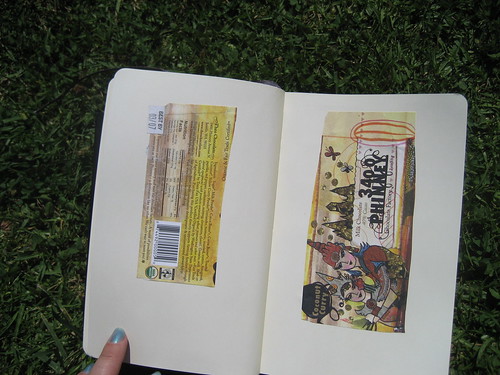
theo chocolate: 3400 phinney coconut curry
i really love odd combinations in chocolate. however, with this one, the coconut curry bar lacks any hint of subtlety. the immediate crash of flavors deadens the palate and there is no need to search for any nuance. they are so close to making a perfect combination - - - i just wished they did not dump the entire indian kitchen in this sweet. stick with vosges on this one.
coppeneur: uba budo
sao tome & principe - agua grande plantation uba budo vollmich chocolade 52% cacao forastero mit himalaya-salz & caramel.
sacrifice everything and get this bar. delicious, gentle, yet bitter. you tease! there is a lot of hypnotic aftertaste that lingers much like a ghostly smokey aperitif. the packaging is divine... complete with a wax seal and booklet. GET THIS FINE DELICACY!

chocolate aguila: chocolate
waxy mess of a chocolate that i picked up in argentina. it does, however, make a great hot chocolate. oddly enough, mike ordered a hot chocolate at the eze airport upon our departure. he was handed hot milk and a little bar of this national chocolate to stir into his drink.

aguila d'or : relleno cappuccino
gentle soft strong cappuccino flavor that is tremendous. i found this fun treasure in buenos aires - chocolate semiamargo relleno con mousse sabor cappuccino

Tuesday, November 13, 2007
pre-dating the love of chocolate
 by Anna-Marie Lever Science and nature reporter, BBC News
Chemical and archaeological evidence has pushed back the earliest known use of cacao, the key ingredient of chocolate, by 500 years.
The chemical compound, theobromine, which only occurs in the cacao plant, has been found on pottery vessels dating back to as early as 1000 BC.
Experts say the vessels were used to serve a fermented cacao drink that was made from the sweet pulp of the plant.
The vessels were unearthed at sites in Puerto Escondido, Honduras.
"The earliest use of cacao in Mesoamerica is likely to have been for a fermented drink," lead author Professor John Henderson wrote in the Proceedings of the National Academy of Sciences (PNAS).
"Such drinks may contain up to 5% alcohol in volume," the Cornell University, US, academic added.
Frothy chocolate
As well as chemical evidence, a change in pottery vessel shape allowed scientists to pre-date the use of cocoa.
It had been known that the seeds were used to make a frothed chocolate drink which became central to social life throughout Mesoamerica. It was drunk at important ceremonies to mark weddings and births, especially by elites.
As the drink was frothy, it was served in a spouted bottle with a flaring neck. However, long-necked bottle samples that pre-date the spouted bottle were also found to contain cocoa residues.
The researchers suggested that this vessel type was inappropriate for frothing but better for pouring.
This led the authors conclude that "early cocoa was consumed as a fermented beverage made from pulp", rather than seeds.
During the time of the Aztec empire, chocolate seeds were used as an early form of money.
Story from BBC NEWS:http://news.bbc.co.uk/go/pr/fr/-/2/hi/science/nature/7087899.stmPublished: 2007/11/13 06:25:10 GMT
Friday, November 9, 2007

Wednesday, November 7, 2007
chocolate and cocoa recipes by miss parloa
the digital libraries of msu has an amazing collection of historic cookbooks. chocolate and cocoa recipes is indeed a treasure. there is historical content as well as many pages of recipes with illustrations.
Tuesday, November 6, 2007
bernard callebaut chocolate package
i received an incredible care package of chocolate yesterday from my good friend brad of bernard callebaut. victoria, b.c. canada 623 broughton street 250.380.1515 .
what an amazing delight of chocolate bars (60% cacao dark chocolate with hazelnuts, white chocolate with pistachios...), baking chocolate (72% cacao, 60% cacao, and 35% cacao), chocolate shavings (already used in my latte this morning - yummy), a box of truffles and filled chocolates, hot fudge sauce, and caramel sauce. this will take some time for tasting.... but yes, I have started already... the dark chocolate with hazelnuts is heavenly. a more detailed review is coming soon.
thank you brad! you rock!


 chocolate snob fans


